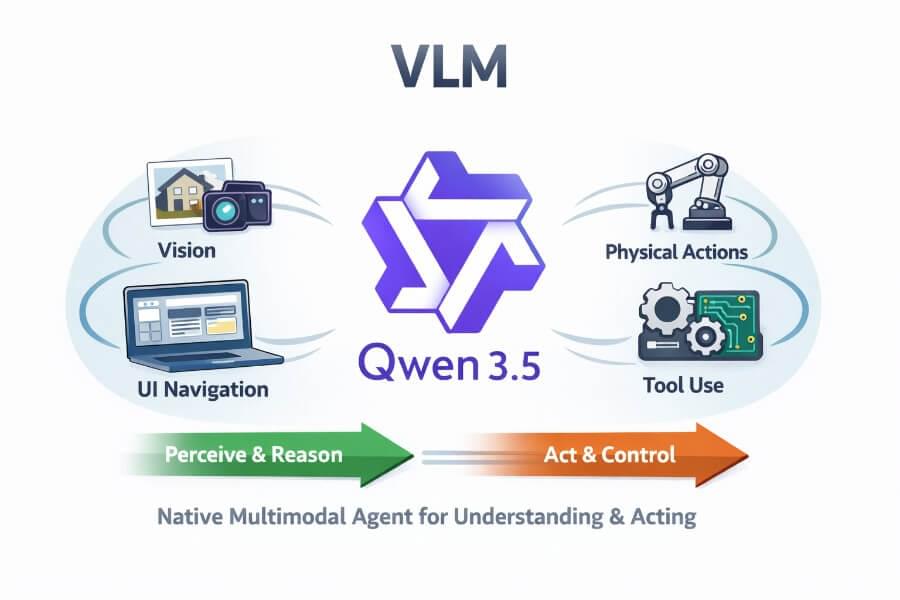
Qwen 3.5 VLM just dropped — and it’s a very “agent-native” kind of multimodal

Qwen 3.5 VLM just dropped — and it’s a very “agent-native” kind of multimodal

A few days ago, Alibaba’s Qwen team released Qwen 3.5, and it’s one of those launches that quietly changes the “default mental model” of what a VLM is supposed to be. Not just a model that can see, but a model that’s clearly being positioned as a native multimodal agent: something that can look at a UI, reason over it, decide what to do next, and (crucially) do so efficiently enough that you can imagine it running in production without your GPU bill turning into performance art.
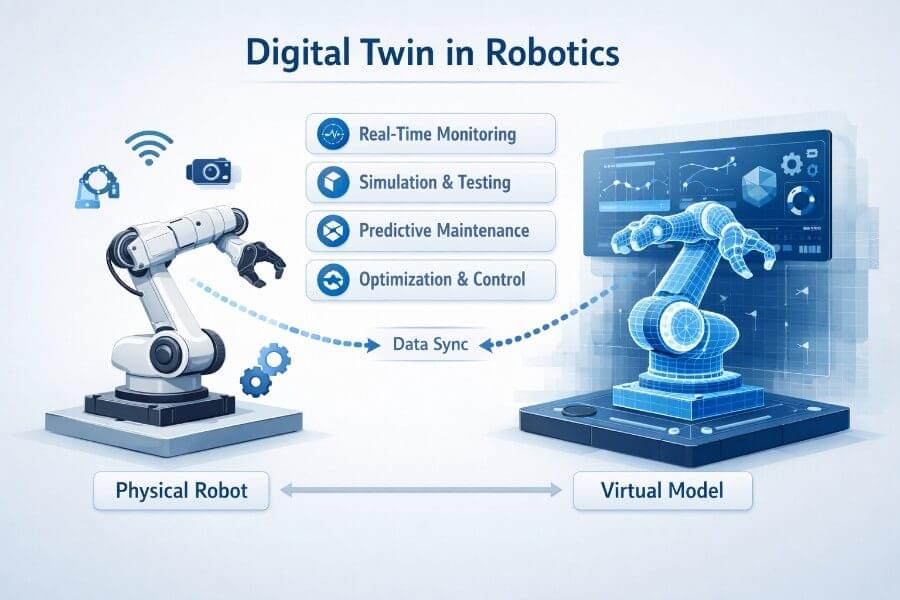
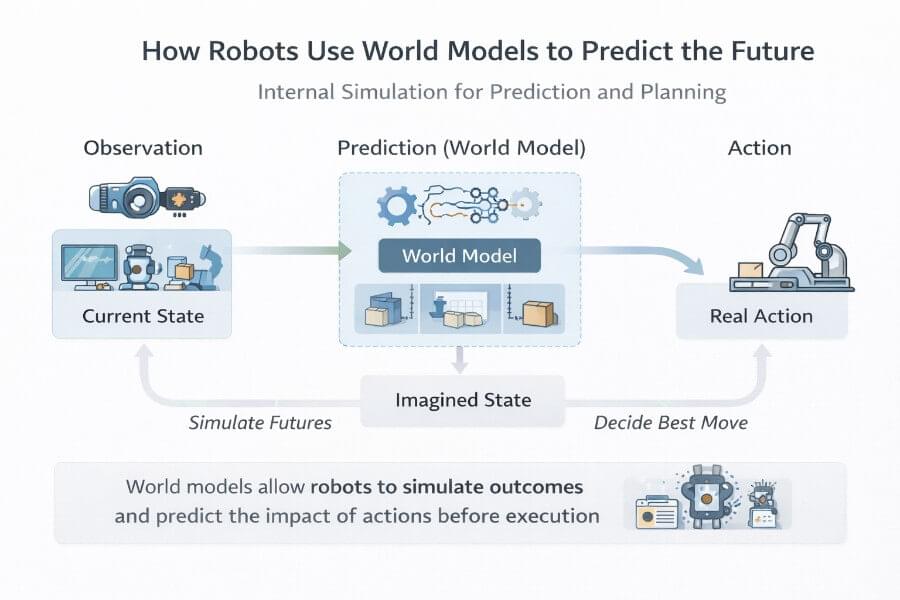
What Is a Digital Twin in Robotics (And What It Is Not)

What Is a Digital Twin in Robotics (And What It Is Not)

The term digital twin in robotics is one of the most overused — and misunderstood — concepts in modern engineering. Digital twins are used to create dynamic digital replicas of physical products and their physical counterparts, not just in robotics but also in construction, manufacturing, and other industries.

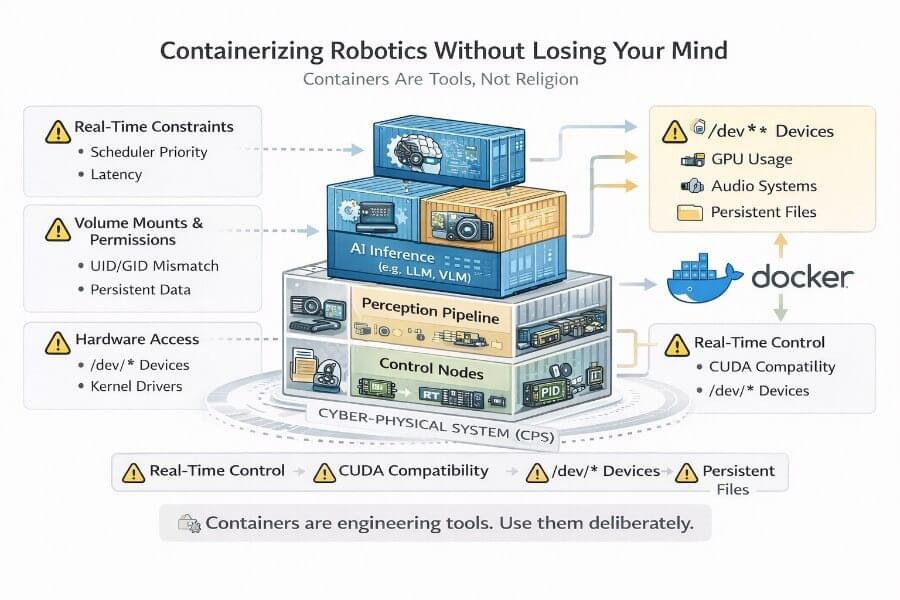
Containerizing Robotic Systems Without Losing Your Mind

Containerizing Robotic Systems Without Losing Your Mind

Containers Are Tools, Not Religion in Cyber Physical Systems

Containerization has become almost ideological in modern software engineering. In web infrastructure, “just Dockerize it” is often the correct answer. In robotics, that mindset can either save you months of pain — or create subtle, catastrophic problems that only appear under load, in the field, or during a live demo.

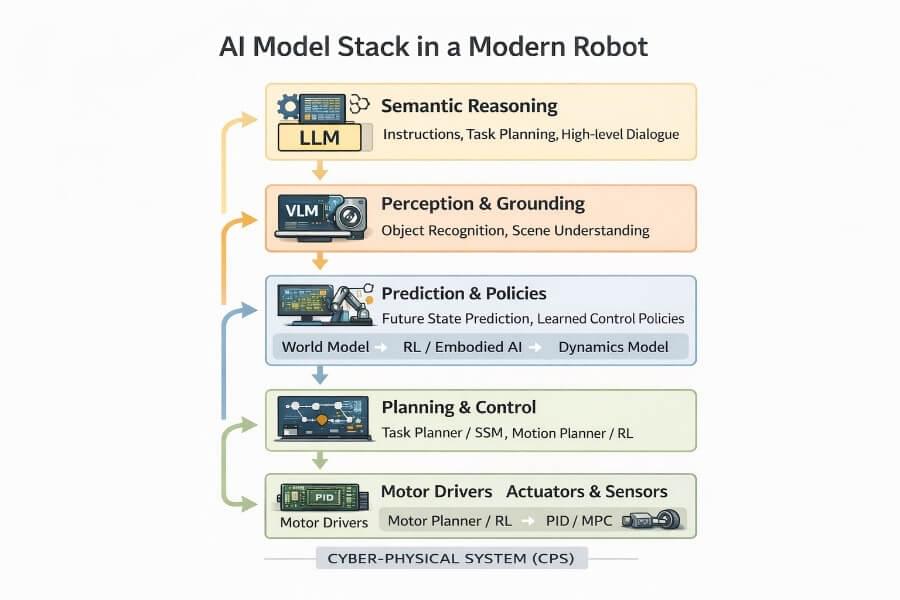
AI in Robotics - An LLM Is Not a Brain - The Real Role of LLMs — and Other AI Models — in a Cyber-Physical system

AI in Robotics - An LLM Is Not a Brain - The Real Role of LLMs — and Other AI Models — in a Cyber-Physical system

Artificial intelligence (AI) has rapidly evolved from a field focused on abstract problem-solving and digital environments to one that increasingly shapes our interactions with the physical world. At its core, AI refers to the development of intelligent systems capable of analyzing data, learning from experience, and making decisions—often with minimal human intervention. Traditional AI systems excelled in software domains, such as natural language processing, computer vision, and data analytics, operating primarily within virtual environments.

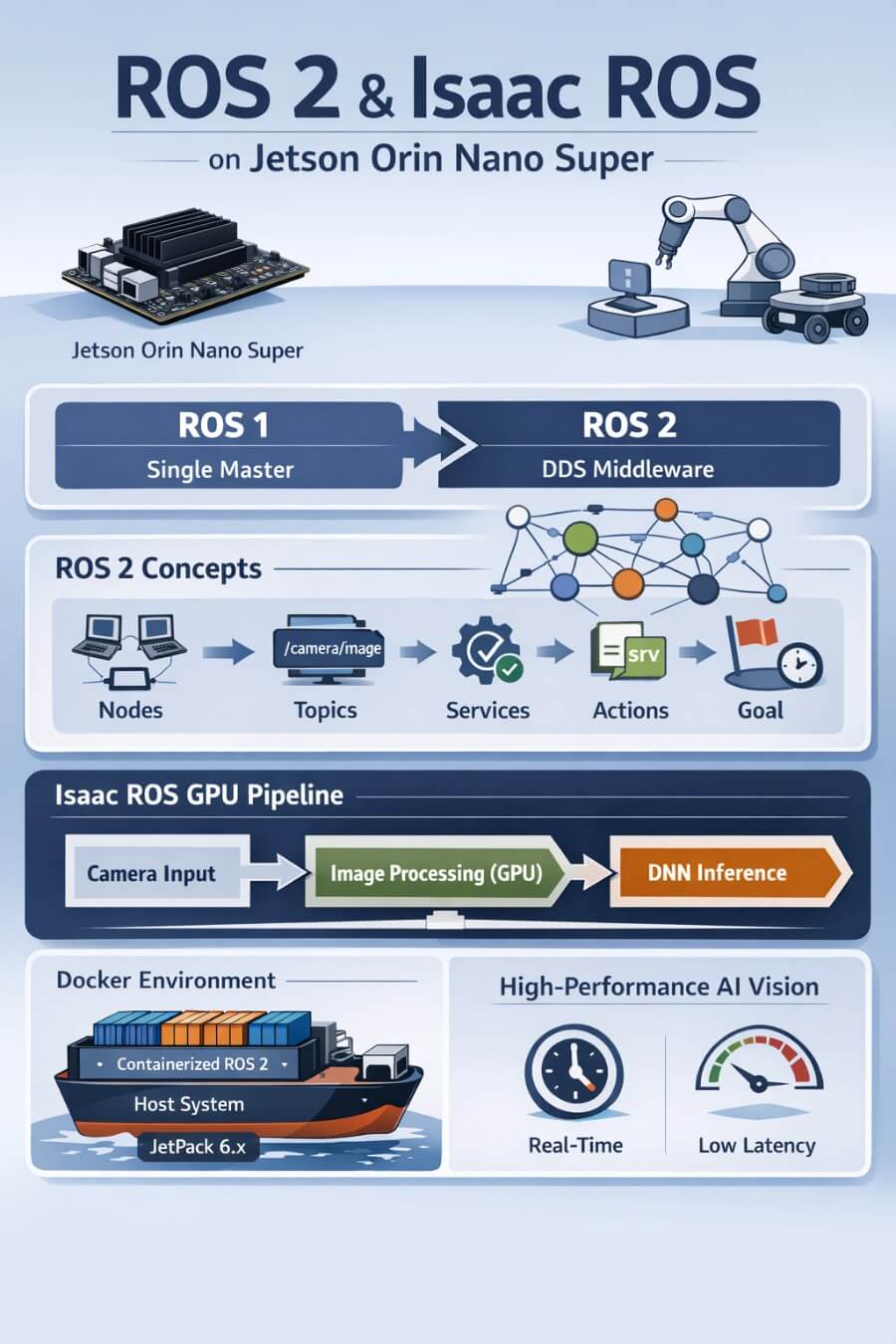
Install a Local AI Runtime (Jarvis-like) container on Jetson Orin Nano with Isaac ROS

Install a Local AI Runtime (Jarvis-like) container on Jetson Orin Nano with Isaac ROS

Scope of this article (important)
This article covers only the Docker container setup: persistence, audio, GPIO, Whisper server access, and Isaac ROS integration on JetPack 6.x.
LLMs, VLMs, dialog logic, and intelligence layers (VAD → Whisper → LLM → TTS) will be covered in future articles.

Think of this as building the body and nervous system of your Jarvis-like runtime — not the brain yet.